Shopify SEO Audit Checklist for UAE E-commerce Stores
Most Shopify stores do not have an SEO problem because of one missing keyword. They have structural issues across collections, products, metadata, internal links, and crawlability.
D2C.ae
Innovation
/
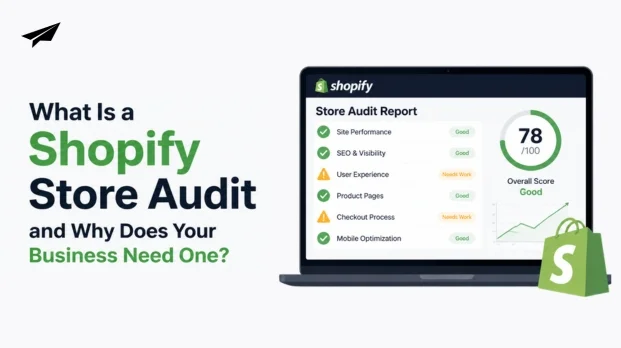
Shopify SEO Audit Checklist for UAE E-commerce Stores
Many UAE e-commerce brands launch on Shopify because it is fast, flexible, and easy to manage.
But launching a Shopify store does not mean the store is ready to rank on Google.
A Shopify website can look good and still have serious SEO problems. Product pages may be too thin. Collection pages may not be optimized. Meta titles may be duplicated. Blogs may not internally link to commercial pages. Images may not have proper alt text. Filters may create duplicate URLs. Google Search Console may show indexed pages that are not bringing traffic.
This is why every D2C brand should run a Shopify SEO audit before spending more on content or ads.
SEO is not only about rankings. It is about building owned traffic so the brand is not fully dependent on paid media or marketplaces.
This checklist explains what UAE and GCC e-commerce brands should review.
Quick Answer
A Shopify SEO audit should check crawlability, indexing, metadata, collection pages, product pages, internal linking, schema, site speed, image SEO, blog structure, Google Search Console data, and local GCC relevance. For UAE e-commerce brands, SEO should focus on high-intent commercial pages, not only generic blog traffic.
Why Shopify SEO matters for D2C brands
Paid ads can bring fast traffic, but they become expensive when the brand depends on them for every order.
SEO creates compounding traffic.
For D2C brands, strong SEO can help:
Rank collection pages
Rank product pages
Capture high-intent buyers
Reduce paid media dependency
Improve brand trust
Support Google Shopping performance
Build authority around product categories
Capture long-tail searches
Improve AI and search engine understanding
Create traffic that does not disappear when ads pause
But SEO only works when the website structure is clean.
A blog alone will not fix a weak Shopify SEO setup.
1. Check if Google is indexing the right pages
The first step is to check whether Google is indexing the pages that matter.
Important pages include:
Homepage
Main collection pages
Product pages
Blog posts
Service or guide pages
Brand story page
FAQ pages
Common Shopify indexing issues include:
Duplicate product URLs
Filtered collection URLs
Tag pages
Search result pages
Old product pages
Out-of-stock products
Pagination issues
Pages with canonical problems
Thin pages indexed by mistake
Use Google Search Console to review:
Which pages are indexed
Which pages are discovered but not indexed
Which pages have impressions
Which pages have zero clicks
Which queries are triggering impressions
Which URLs have poor CTR
Which pages rank on page 2 or 3
For a new store, page 2 rankings are an opportunity. Those pages may only need better titles, content, internal links, or topical support.
2. Fix meta titles and descriptions
Meta titles still matter because they help search engines and users understand the page.
For Shopify stores, common problems include:
Duplicate titles
Titles that are too generic
Missing category keywords
Brand name repeated badly
Product titles copied directly from suppliers
“My Shopify Store” or template text
Descriptions that do not explain the offer
A good collection page title should include the product category and market where relevant.
Examples:
Buy Vinyl Records Online in UAE | Vinyl.ae
Skincare Products for Sensitive Skin UAE | Brand Name
Premium Activewear for Women in Dubai | Brand Name
Organic Baby Products UAE | Brand Name
A good meta description should mention the product category, customer benefit, and trust signal.
For a D2C brand, metadata should not be stuffed with keywords. It should be clear, specific, and clickable.
3. Optimize collection pages first
Many brands focus only on product pages. But collection pages are often stronger SEO assets.
A collection page can rank for broader commercial keywords like:
buy skincare UAE
women activewear Dubai
organic snacks UAE
vinyl records Dubai
baby products online UAE
home decor Dubai
pet products UAE
A strong Shopify collection page should include:
Clear H1
SEO-friendly intro copy
Product grid
Useful filters
Internal links to subcategories
FAQ section
Buyer guidance
Unique meta title and description
Relevant schema where possible
Links to related blogs
Do not leave collection pages empty except for products. Google needs content to understand the page.
But avoid writing long generic paragraphs that nobody reads. Keep the content useful and buyer-focused.
4. Improve product page SEO
Product pages often fail because they are too thin.
A product page should answer the questions a customer has before buying.
Review:
Product title
Product description
Benefits
Specifications
Ingredients or materials
Size or dimensions
Usage instructions
Delivery information
Return information
Reviews
FAQ
Product images
Image alt text
Related products
Cross-sells
Structured data
If your product descriptions are copied from suppliers, Google has no strong reason to rank your page.
Write original product descriptions that include:
Who the product is for
What problem it solves
What makes it different
How to use it
Why it fits UAE or GCC customers
Delivery and trust details
Product page SEO should support both search engines and buyers.
5. Use internal linking properly
Internal links help Google understand which pages matter.
Most Shopify stores have weak internal linking because blogs, collections, and product pages are disconnected.
A better structure:
Blog posts link to relevant collection pages
Collection pages link to related guides
Product pages link to related products
Homepage links to top categories
Footer links to key SEO pages
Service or guide pages link to audit or contact pages
FAQs link to relevant buying pages
For example, a blog about “how to choose a turntable” should link to the turntable collection page. A blog about “best skincare routine for summer in UAE” should link to the relevant skincare collection.
Internal linking should guide both Google and customers.
6. Add FAQ sections for SEO and conversion
FAQ sections help with long-tail keywords and customer confidence.
Good e-commerce FAQs answer real buying questions:
How long does delivery take in the UAE?
Do you ship across the GCC?
What payment options are available?
Can I return or exchange the product?
Is this product suitable for sensitive skin?
What size should I choose?
How should I use this product?
Is this product original?
Is this item in stock?
FAQs should be added to collection pages, product pages, and important blog posts.
They are useful for SEO, AI search visibility, and conversion.
7. Check schema markup
Schema helps search engines understand your website.
For Shopify stores, important schema types include:
Product schema
Offer schema
Review schema
Breadcrumb schema
Organization schema
FAQ schema
Article schema
Local business schema where relevant
Common issues include:
Missing product schema
Broken review schema
Incorrect price or availability
Duplicate schema
No breadcrumb schema
Missing organization details
Schema will not magically rank a weak page, but it improves clarity and can support better search presentation.
8. Improve image SEO
E-commerce websites depend heavily on images.
Image SEO should include:
Descriptive file names
Useful alt text
Compressed images
Correct dimensions
WebP where possible
Fast loading
Product-specific alt text
No generic names like image123.jpg
For example, instead of:
image-1.jpg
Use:
black-leather-tote-bag-uae.jpg
Alt text should describe the image naturally. Do not stuff keywords.
Good image SEO improves accessibility, search understanding, and sometimes image search traffic.
9. Review site speed and mobile experience
Most e-commerce traffic is mobile.
A slow Shopify store can hurt both conversion and SEO.
Check:
Mobile page speed
Image size
App bloat
Theme code
Third-party scripts
Popups
Heavy videos
Layout shift
Font loading
Checkout experience
Many Shopify stores become slow because too many apps are installed over time.
Before adding more tools, audit what is actually needed.
Speed matters because customers will not wait for a slow store, especially on mobile.
10. Use Google Search Console properly
Google Search Console is one of the most important tools for Shopify SEO.
Review:
Queries with impressions but no clicks
Pages ranking between positions 8 and 30
Pages with low CTR
Indexed pages with no traffic
Mobile usability issues
Crawl errors
Sitemap status
Canonical issues
Top-performing pages
Search intent patterns
For new websites, the best opportunities are often pages already getting impressions.
If a page ranks on page 2, improve it before creating completely new content.
11. Build blog content around commercial pages
Blogs should not be random.
Every blog should support a commercial page.
For example:
“How to choose running shoes” should support running shoe collection
“Best skincare routine for UAE summer” should support skincare collection
“How to style linen shirts” should support linen shirt collection
“How to choose a record player” should support turntable collection
The blog is not only for traffic. It should build topical authority around the products you sell.
A Shopify SEO blog strategy should include:
Buyer guides
Comparison posts
Category education
Product care guides
Founder POV
Trend articles
Local market guides
FAQ-led posts
Problem-solution posts
Each post should have internal links to collections, products, and contact or audit pages.
12. Localize SEO for UAE and GCC customers
If your brand sells in the UAE or GCC, your content should reflect that.
Add relevant local signals:
UAE delivery
Dubai or Abu Dhabi relevance where appropriate
GCC shipping
Arabic keywords where relevant
Local payment options
Local customer concerns
Seasonal shopping occasions
Ramadan, Eid, summer, gifting, back-to-school, year-end
Local trust signals
WhatsApp support
Do not force location keywords everywhere. Use them where they help the customer.
Shopify SEO audit checklist
Use this quick checklist:
Is the homepage title optimized?
Are collection pages unique?
Do product pages have original descriptions?
Are duplicate URLs controlled?
Are canonical tags correct?
Are meta titles unique?
Are meta descriptions written properly?
Are H1 tags clear?
Are images optimized?
Is product schema working?
Is FAQ content added?
Are internal links useful?
Is the site fast on mobile?
Are blogs supporting commercial pages?
Is Google Search Console clean?
Are important pages getting impressions?
Are page 2 rankings being improved?
Is there a clear SEO content roadmap?
Final thoughts
Shopify SEO is not one task. It is a system.
A D2C brand needs technical SEO, collection optimization, product page SEO, content strategy, internal linking, schema, mobile speed, and search intent alignment.
For UAE e-commerce brands, SEO is especially valuable because paid media is competitive and marketplace dependency can limit customer ownership.
If your Shopify store is indexed but not getting clicks, the issue may not be “Google is slow.” The issue may be that your pages are not structured, linked, or optimized strongly enough.
Need a Shopify SEO audit?
D2C.ae helps UAE and GCC e-commerce brands audit Shopify SEO, technical issues, collection pages, product pages, internal linking, schema, and search visibility.
Book a Shopify SEO Audit before creating more content or increasing ad spend.
FAQ
What is Shopify SEO?
Shopify SEO is the process of improving a Shopify store so search engines can crawl, understand, and rank its products, collections, blogs, and pages.
Why is my Shopify store not ranking on Google?
Common reasons include weak collection pages, thin product descriptions, duplicate URLs, poor metadata, missing internal links, slow speed, and low authority.
Are collection pages important for Shopify SEO?
Yes. Collection pages are often the most important SEO pages for e-commerce because they can rank for high-intent category keywords.
Should Shopify product descriptions be original?
Yes. Original product descriptions help both customers and search engines understand why your product is different.
Can D2C.ae help with Shopify SEO?
Yes. D2C.ae can audit your Shopify store’s technical SEO, product pages, collection pages, schema, internal linking, and Google Search Console data.